


Building automation over Single Pair Ethernet
One twisted pair. Up to 1 km.
A practical migration path.
Circon controllers speak BACnet/IP end to end over 10BASE-T1L — extending your IP network deep into the building, with no extra switches or gateways. Reuse existing wiring, cut installation cost, and simplify every retrofit.
Native IP, all the way to the field
Single Pair Ethernet (SPE) — the 10BASE-T1L standard — carries full, native TCP/IP over a single twisted pair, at 10 Mbps and up to 1 km. For building automation, that means the same BACnet/IP you run in the head-end reaches all the way out to your field controllers — with no gateways and no protocol translation, over the familiar two-wire, screw-terminal cabling you already use. The controllers drive your sensors and actuators exactly as they do today; what changes is the fast, native-IP link that connects them.
Native BACnet/IP
Run the exact same BACnet/IP all the way to the field device — no MS/TP-to-IP routers and no protocol translation to configure or maintain.
Up to 10 Mbps to the edge
Far more throughput than the legacy fieldbus it replaces — plenty of headroom for rich telemetry, analytics, and AI right at the edge.
Up to 1 km reach
Ten times the 100 m limit of office Ethernet. Reach deep into a building or across a campus from a single switch, no repeaters in between.
Familiar two-wire wiring
A single twisted pair on rugged screw terminals — field-grade wiring you already know, not office-grade RJ45 built for the IT closet.
Retrofit without rewiring
Reuse your existing twisted-pair runs. Move to native IP without pulling new cable through occupied, operating buildings.
OT meets IT
One IP network from field to cloud. BACnet/IP, MQTT, and standard IT tools run natively all the way to the controller.
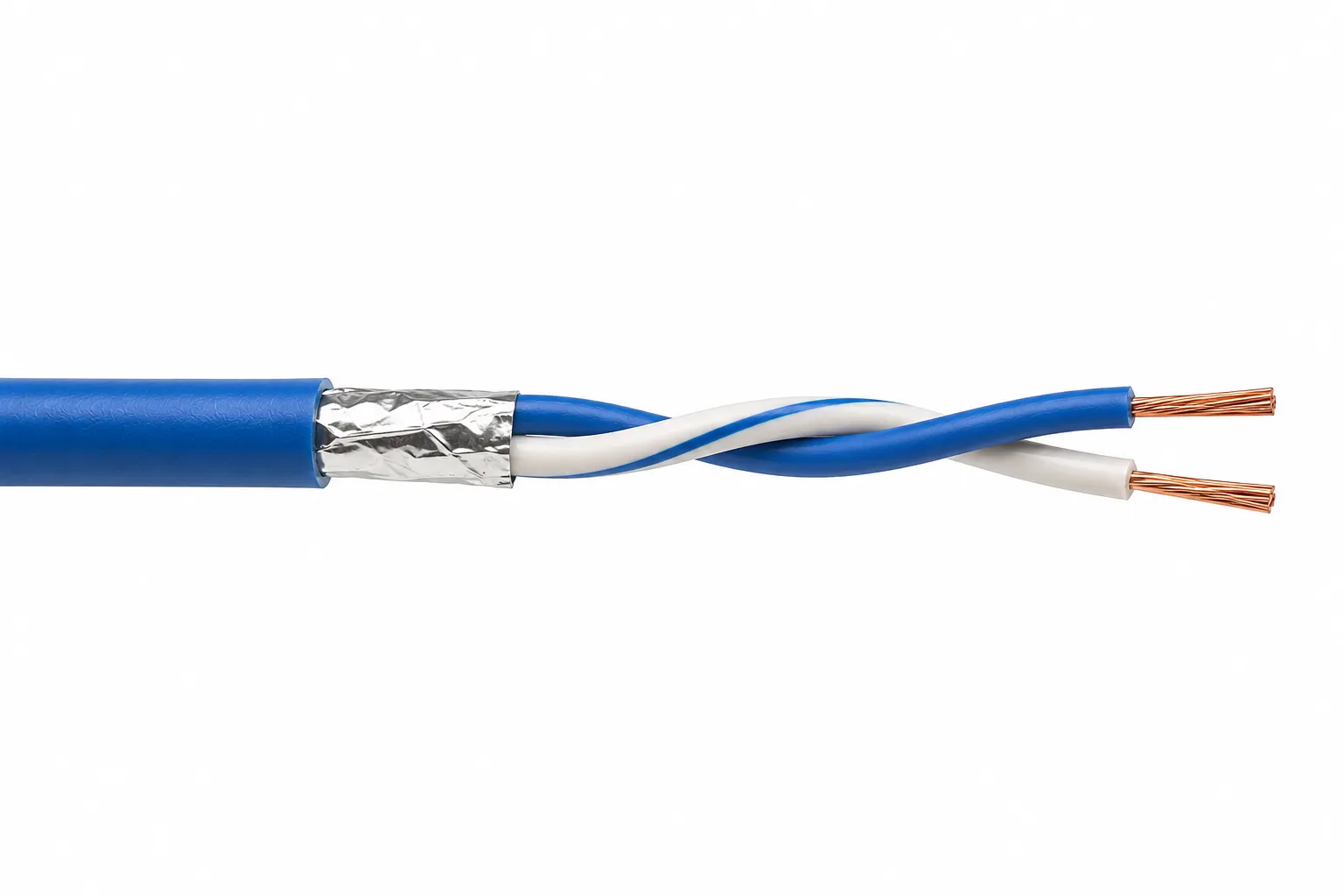
It's just one twisted pair
The same two-conductor field cable your installers already pull and land on screw terminals — now carrying native, high-speed IP straight to the controller. No four-pair Cat6, no RJ45 crimping, and no structured-cabling tooling.
TCP/IP all the way to the edge
Traditional building automation stops IP at a gateway and drops to a slow fieldbus for the last leg to the controller. Single Pair Ethernet keeps native TCP/IP running the whole way — one network from the IT room to the field controller. It's where OT meets IT: the same BACnet/IP, MQTT, and standard tooling, field to cloud.
Beyond legacy — and beyond office Ethernet
vs. legacy fieldbus
Compared with legacy building buses like LON FT-10 and BACnet MS/TP, Single Pair Ethernet is a generational leap. Those protocols run at only a small fraction of Ethernet speed, and they only reach the IP world through a gateway that translates protocols, adds latency, and becomes one more thing to configure and maintain. SPE is dramatically faster — and native BACnet/IP end to end: the same protocol from head-end to controller, no translation. You keep the familiar single-twisted-pair, screw-terminal wiring you already use — what changes is what runs over it.
Why SPE, not just regular Ethernet?
An integrator's first question is usually "why not just run Cat6?" Because SPE drops the office-grade baggage and fits how controls people already work:
Reach — up to ~1 km on a single pair, versus the ~100 m limit of standard Cat6 — fewer switches, and no wiring closets scattered through the building to reach distant equipment.
Retrofit — often reuses existing two-wire, RS-485, or LON field cable, so an upgrade becomes a pull-and-upgrade instead of a rip-and-replace.
Simplicity — one pair, not the two-to-four pairs of Cat5e/Cat6 — lighter cable and easier conduit fill.
Termination — land bare field wire on screw terminals — no RJ45 crimping and no structured-cabling tooling, the same way installers already wire LON and MS/TP. Sturdier in the field than a crimped RJ45 — a known failure point — and happy with solid-core field wire.
No compromise — it's real Ethernet — native IP, standard packet format, auto-negotiation — and it joins your existing Ethernet backbone through a single passive media converter. No special TCP/IP stack or drivers.
The trade-off, stated plainly: 10BASE-T1L is 10 Mbps full-duplex — far more than building-control traffic needs, deliberately traded for distance and single-pair simplicity.
Single Pair Ethernet, answered
The essentials on 10BASE-T1L for building automation — how it compares to legacy fieldbus and office Ethernet, and how it brings native BACnet/IP to the field.
Ready to simplify your building network?
Talk to us about Single Pair Ethernet for your next project or retrofit.